

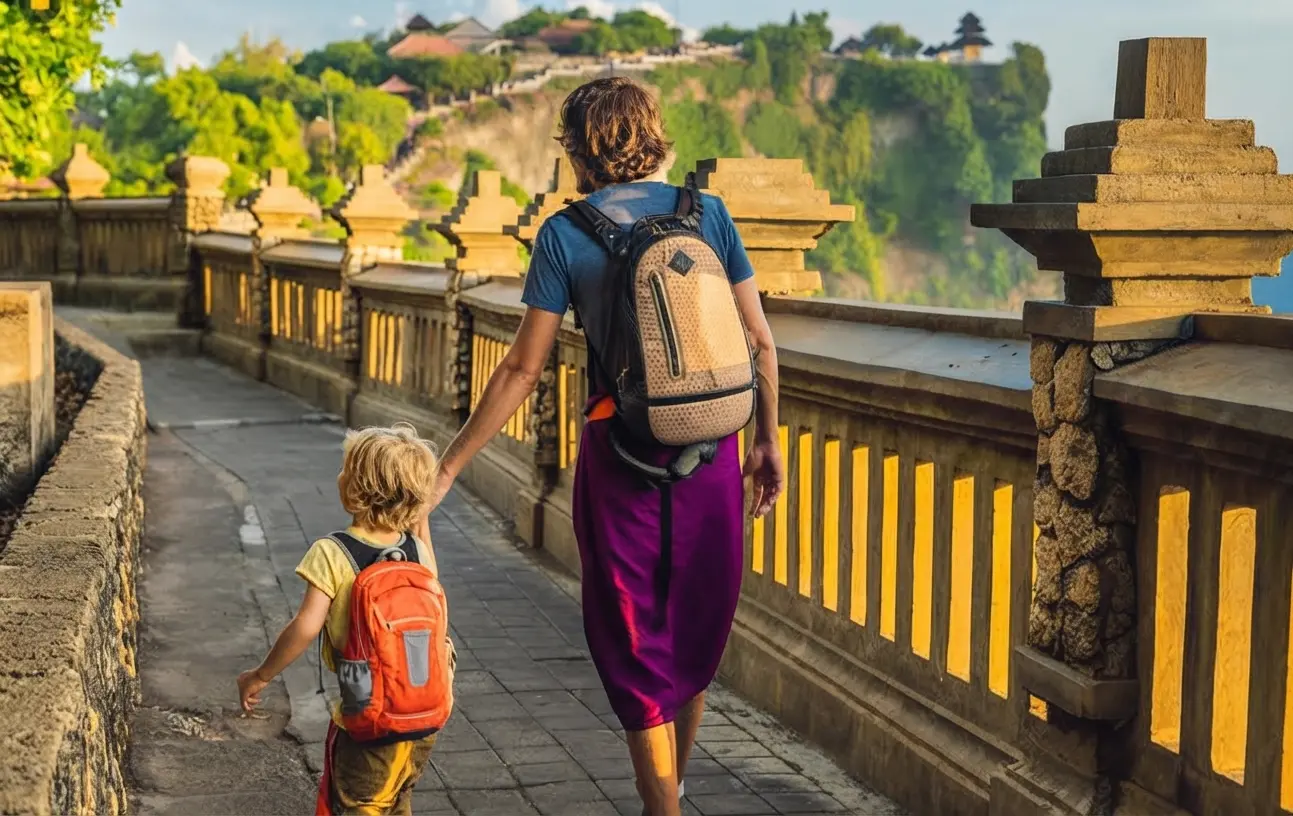
Understanding and respecting Bali temple etiquette is an important part of visiting the island, especially if you want to experience Balinese culture and traditions through its religious rituals and sacred spaces. Temples are places of worship, so there are certain customs and rules visitors are expected to follow as a sign of respect.
If you are planning to visit a temple, this Bali temple etiquette guide will help you understand the basics before you go. Below, we cover what to wear, the main rules to follow, how to behave respectfully, and what to keep in mind when taking photos.
A pura is a holy place of worship for Bali’s Hindu community. Beyond religious ceremonies and prayer, temples also play an important role in spiritual, cultural, and community life across the island. Because of their significance, visitors are expected to respect the customs and rules that help preserve the sacred atmosphere of these spaces.
Temples in Bali are active places of worship rather than simply tourist attractions. They are used by Balinese Hindus to pray to Ida Sang Hyang Widhi Wasa, the Supreme God, along with His various manifestations.
Temples are also places where people come to strengthen their spiritual connection, honour ancestors, and take part in religious ceremonies. At the same time, many temples serve as important gathering places for local communities, bringing people together through ceremonies, traditions, and other cultural activities.
Pura can be found throughout Bali, with different temples serving different religious and community purposes. Besakih Temple, located on the slopes of Mount Agung, is Bali’s largest temple complex and one of its most sacred.
At the village level, temples such as Pura Desa or Bale Agung, Pura Puseh, and Pura Dalem each have their own spiritual role within Balinese Hindu life and the community.
Because temples are revered places of worship, there are certain rules and customs visitors are expected to follow. These practices are rooted in Balinese Hindu beliefs, local traditions, and customary practices that help maintain the purity and respectful atmosphere of the temple.
Following local rules and any instructions given by temple staff or residents is therefore an important part of visiting a Bali temple. It shows respect for the place of worship, the people using it, and the traditions that have been practised there for generations.
It also helps avoid offending anyone unintentionally and allows everyone to experience the temple in a respectful and comfortable way.
Visiting a temple in Bali is different from going to a regular tourist attraction where you can wear whatever feels most comfortable. You are expected to dress modestly, wear clean and appropriate clothing, and follow the local dress code.
In general, Bali temple dress code means keeping your shoulders and knees covered while also wearing a sarong or kamen and a sash, known as a senteng, around the waist.
Visitors are required to wear a sarong or kamen that covers the lower part of the body, regardless of gender. You will also need a sash or senteng tied around the waist.
In Balinese traditional dress, the sash is not only part of the clothing itself, but also carries a meaning connected to self-control and emotional balance. If you did not bring your own, most major temples rent or lend sarongs and sashes at the entrance.
Avoid wearing clothing that is too revealing when visiting a temple. Choose something modest and non-transparent, and make sure your shoulders and knees are properly covered. Following this dress code is an important way to show respect for the holy space and its spiritual significance.
If you visit a temple during a religious ceremony, pay extra attention to your outfit. Choose clean, modest clothing with the required sarong and sash, and follow any extra instructions from temple staff or the local community.
Beyond the dress code, there are several other Balinese temple rules you need to follow once you set foot inside a Bali temple. Here are some of them:
Visitors can enter the outer courtyard, and some temples also allow access to the middle courtyard under strict rules. Footwear is usually allowed in the outer and middle courtyards, but remove it when asked or before certain stairs and cliffside paths.
Rules vary from one temple to another, so follow the instructions whenever you are asked to remove your footwear.
When you visit a temple, you'll see offerings such as canang sari or banten placed around as part of Hindu worship. Never touch, step on, or step over them, as doing so is considered to defile the sanctity of the ritual and disrespect the place of worship.
These offerings symbolize gratitude, sacrifice, and sacred energy, and form part of the ritual of maintaining balance. If you accidentally step on one, simply offer a sincere apology to any Balinese people nearby, and remember to always watch your step while walking through the temple, as offerings are often placed on the ground as well.
Temples in Bali are traditionally divided into three zones known as Tri Mandala: the outer courtyard (nista mandala), the middle courtyard (madya mandala), and the inner sanctum (utama mandala, also called jeroan).
The outer courtyard is open to visitors, while access to the middle courtyard depends on the temple and is often subject to strict rules. The inner sanctum is reserved for worshippers and temple priests (pemangku), and it is closed to tourists.
Entering it without permission can result in penalties under local law and customary regulations, including fines or, in serious cases, deportation. Women who are menstruating are also asked to stay out of temple grounds, in line with Balinese Hindu beliefs about purity.
If you're visiting a temple as part of a private tour in Bali, your guide will likely walk you through the specific rules to follow. Even without a guide, temple staff or local caretakers will usually let you know the rules and instructions you're expected to follow and respect.
As a visitor, it's your responsibility to honour these rules out of respect for the local religion and traditions. Be sure to follow every instruction given, as well as any temple signs you come across, such as no entry and no photography.
Visiting a temple is one of the most fascinating things you can do in Bali. Because it carries religious significance, mind your behavior and follow every rule, including photography restrictions in certain areas.
While inside temple grounds, avoid speaking carelessly or too loudly. Lowering your voice is a form of respect for the sanctity of the place of worship, and it helps preserve the comfort and peace of Hindu worshippers who are praying, as well as the calm of the surroundings. This is basic courtesy that every visitor should observe.
If you want to photograph people within temple grounds, always ask for permission first as a sign of respect for their privacy, the sacredness of the place of worship, and local cultural etiquette. Everyone has a right to their own privacy, and photographing someone secretly or without consent is considered impolite.
Asking first also helps avoid misunderstandings and discomfort. Do not take photos in restricted areas, especially the inner sanctum or any spot marked with a no-photography sign. Skip the flash as well, to preserve the solemnity of the space.
If a religious ceremony is taking place within the temple, be mindful of your behaviour and avoid taking photos indiscriminately, out of respect for the ongoing ceremony and to preserve its sanctity and solemnity. Stay respectful and follow every rule in place.
Never behave carelessly in a way that could disturb the focus of those praying inside the temple. Disrupting worship goes against religious norms, etiquette, and basic human rights, and may result in serious consequences, whether through customary law or formal legal channels.
In Balinese belief, the head is the most respected part of the body and the feet the least, so avoid sitting higher than a priest or the offerings, and never point your feet toward a shrine or altar.
Bali temple etiquette is something you need to know and follow whenever you visit these sacred spaces. The most important points to keep in mind are wearing appropriate clothing (avoid shorts and revealing outfits), maintaining respectful behaviour, following local rules, and being mindful around ceremonies.
To make your trip around Bali even more comfortable, consider booking your accommodation with Stay at SOLO Villas. With properties across the island, many of our villas, such as The Vinava Villa and Kanadea Villa, are conveniently close to the temples and other destinations you plan to visit, making them some of the best places to stay in Bali.