

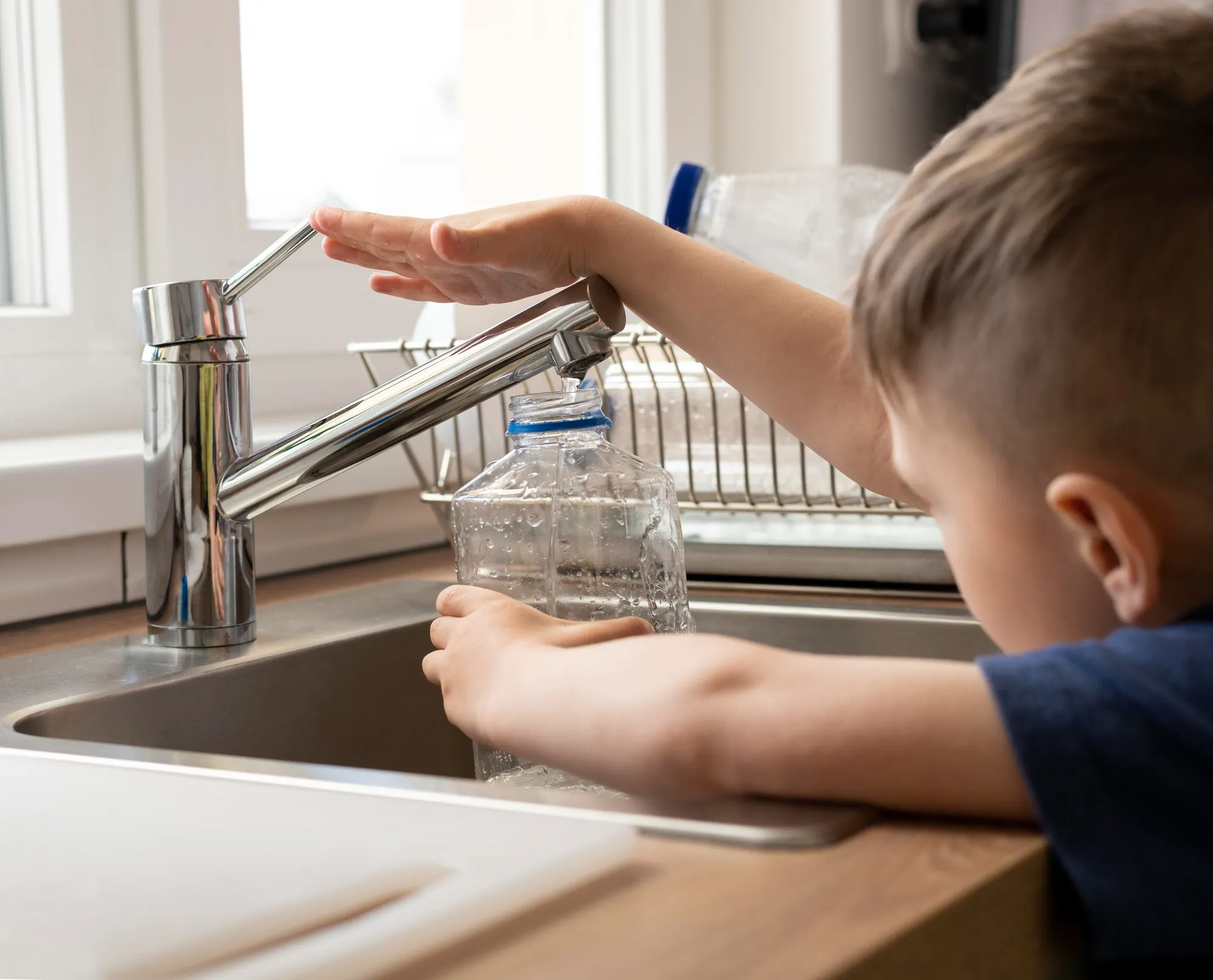
You may wonder whether tap water in Bali is safe or should be avoided to stay hydrated. Actually, tap water is not recommended for tourists to drink directly from the tap, as bottled, filtered, or properly treated water is preferable.
Then, find out whether tap water in Bali is safe for drinking and everyday use, including brushing teeth, showering, washing the face, and cooking. You will know what to do if you accidentally drink tap water.
During your stay in the best villa in Bali for families, you may wonder, “Can you drink tap water in Bali?” since every villa has tap water for daily use. Generally, tap water is not recommended for drinking, even when it looks clear.
Use bottled or properly treated water instead, as untreated water may be contaminated with microorganisms. They cause stomach problems such as diarrhea, vomiting, or even abdominal discomfort.
Choosing treated water, such as bottled water, helps you avoid Bali Belly, which causes massive diarrhea and stomach cramps. So, it is recommended to avoid drinking directly from Bali’s tap water to make your trip more comfortable.
Bali drinking water varies, as you can find bottled water or treated water that has undergone filtration. Bottled water is widely available at hotels, villas, restaurants, convenience stores, and supermarkets across the island.
Even a family villa in each zone, like Canggu, provides filtered or refillable drinking water, either through dispensers, glass bottles, or in-room water stations. It is a practical choice for longer stays, reducing the amount of single-use plastic bottles during your stay.
You can choose from all of these options to stay hydrated, which is crucial in Bali's hot weather. Consistent hydration can make a noticeable difference during long days of sightseeing, beach activities, and outdoor exploration.
For safe drinking water in Bali, you can use tap water for showering, washing hands, cleaning, and other everyday household needs. Many accommodations separate regular tap water from purified or bottled water, which is safe for daily consumption.
You can shower with the water, but avoid swallowing it, even when you are staying in a luxury villa. The same precaution applies when rinsing your mouth or brushing your teeth, as many tourists prefer to use bottled or filtered water for these activities.
It is safer to use purified drinking water while washing fruit or preparing meals, especially if it will be consumed fresh. When water is boiled during preparation, it is less of an issue, while safe handling techniques are still important.
Local drinking habits usually avoid drinking Bali tap water boiled for daily consumption. Locals commonly use bottled water, large refillable water gallons, or filtered drinking water, as they are safer options for daily hydration.
Many accommodations have installed filtration or purification systems, including sediment filters, activated carbon, ultraviolet treatment, or a combination of methods. However, you should not assume tap water from every kitchen or bathroom tap is safe to drink.
As a tourist, the easiest approach is to follow the same general habit as locals, who use clearly identified water for consumption and regular tap water for washing and other household purposes. Simply ask the staff at your accommodation whether the water is safe for drinking.
To avoid Bali Belly, which is commonly thought to be contagious, you can start by being consistent about the water you drink. It is best to use sealed bottled water, properly filtered water, or water supplied specifically for drinking.
It is worth paying attention to water used beyond drinking. You can use safe water for brushing your teeth if you have a sensitive stomach, and make sure uncooked foods have been washed with clean water.
If you already experience diarrhea, vomiting, fever, dehydration, or even significant symptoms during your trip, seek medical advice immediately. Simple habits around drinking water in Bali are enough to reduce unnecessary risk and enjoy the trip more comfortably.
If you experience persistent diarrhea, vomiting, fever, dehydration, or other significant symptoms during your trip, seek medical advice rather than assuming it will pass on its own. For most visitors, however, a few simple habits around Bali drinking water are enough to reduce unnecessary risk and enjoy the trip more comfortably.
Drinking water in Bali during a villa stay is usually safer, as filtered bottled water is separated from the tap water used in bathrooms and kitchens. Depending on the property, this may come as sealed bottles, refillable glass bottles, a water dispenser, or a filtered drinking-water system.
Bringing your own tumbler is a good thing to pack for a Bali trip because you can fill it with water in a refillable dispenser. It keeps you from being dependent on single-use plastic bottles, which raises additional environmental concerns.
The simplest approach to avoid using tap water in Bali is to follow the villa’s guidance and use only clearly identified drinking water for anything you plan to consume. It keeps your daily routine straightforward while helping you stay comfortable during the trip.
Following practical water tips before and during your Bali trip will help protect you from sickness. During your stay, keep these practical tips in mind, including:
You don’t need to make water issues complicated. Understanding which water is safe for daily consumption, like bottled water or a refillable dispenser, is already enough to keep you hydrated and avoid contagious illness.
Avoiding tap water in Bali for daily consumption helps you stay comfortable during your trip in Bali. While tap water is utilized for daily tasks like taking a shower or brushing your teeth, it is recommended that you stay hydrated by drinking bottled, filtered, or adequately treated water.
Safer water during a trip in Bali is available at Stay at SOLO, the best villa for families. The villa provides bottled water, which keeps you hydrated and reduces the risk of illness from unfiltered water.
It is generally not recommended to drink tap water in Bali. Travellers should use sealed bottled water, properly filtered water, or purified drinking water supplied by their hotel, villa, or restaurant.
Most locals do not drink untreated tap water directly. Many households use refillable water gallons, bottled water, boiled water, or home filtration systems for drinking and cooking.
Yes, tap water is generally used for showering and bathing throughout Bali. Try not to swallow the water while showering, particularly if you have a sensitive stomach.
Many travellers prefer to brush their teeth with bottled or filtered water, especially during the first few days of their trip or if they have a sensitive digestive system. If you want to minimise risk, keep a bottle of safe drinking water beside the bathroom sink.
Yes, tap water is generally fine for washing your face and normal skincare routines. However, people with particularly sensitive skin may notice differences in mineral content or water quality between accommodations.
Accidentally swallowing a small amount of tap water does not automatically mean you will become sick. Continue drinking safe, purified water and monitor how you feel. If you develop persistent diarrhea, vomiting, fever, severe abdominal pain, or signs of dehydration, seek medical advice.
Boiling water can kill many harmful microorganisms, making it safer from a microbiological perspective. However, boiling does not remove all minerals, chemicals, or other possible contaminants, so properly purified or filtered drinking water is generally the more reliable option.
Safe drinking water is widely available across Bali. You can find sealed bottled water at convenience stores and supermarkets, while many hotels, villas, restaurants, cafés, and coworking spaces provide filtered water or refill stations. Some accommodations also provide refillable glass bottles or large drinking-water dispensers to reduce single-use plastic.